Your driver medical
Your medical is included in the new-driver package. We help arrange an appointment, usually available the same or following week after sign-up.
Get your Category C1 licence with C1 HGV training for work, leisure and your next driving goal. Start from a car licence, with experienced instructors and a dedicated adviser from your first call through to passing.
Your adviser will confirm the course schedule and test arrangements for your training location.
See how your C1 training course combines practical driving lessons, instructor guidance and preparation for your new career.
Your adviser can answer questions about the training package and help you plan your next step.
Get C1 course advice ↗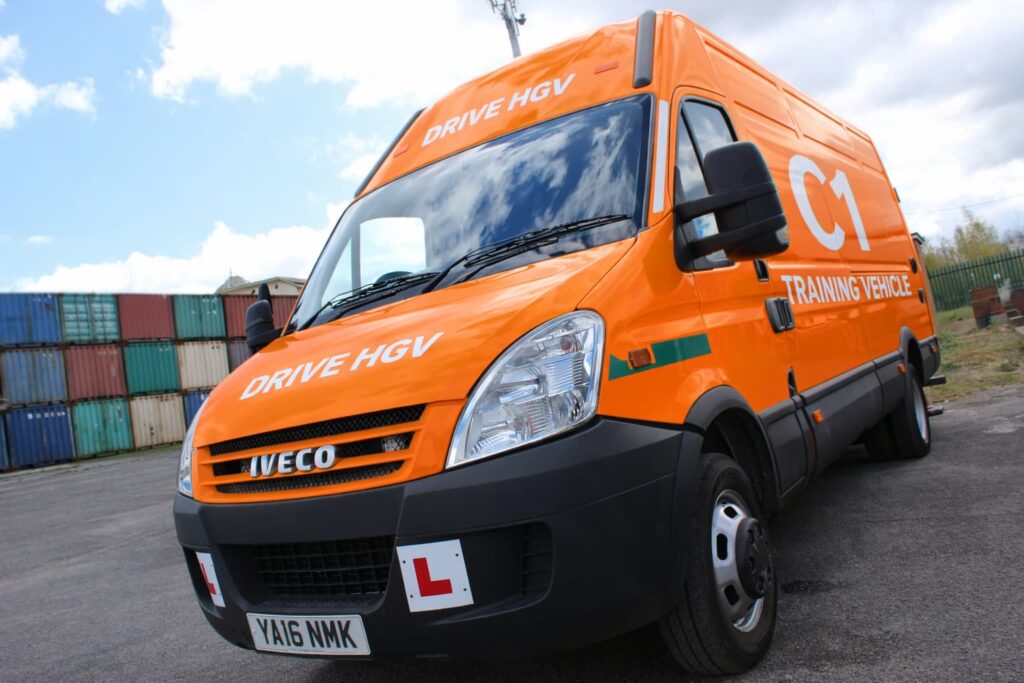
C1 covers vehicles over 3.5 tonnes and up to 7.5 tonnes maximum authorised mass, with a trailer up to 750kg.
Maximum authorised mass (MAM) is the vehicle’s permitted fully loaded weight. Check its plated weight, rather than how much it happens to weigh when empty.
C1 can suit delivery vehicles, ambulances, motorhomes and horseboxes within this weight range. For a vehicle above 7.5 tonnes, explore Category C training. A trailer over 750kg requires the appropriate additional entitlement.
If you have a full car licence but no C1 entitlement, we can guide you through the steps to your 7.5-tonne licence.
You don’t need previous experience driving larger vehicles. Your lessons build confidence with the vehicle’s dimensions, mirrors and road positioning.
Some drivers who passed their car test before 1 January 1997 already hold C1 entitlement. Check your current licence categories, expiry dates and restriction codes before booking a new licence course.
Tell your adviser which vehicle you want to drive and whether it is for work or personal use, so they can explain the right training and CPC requirements.
Your medical is included in the new-driver package. We help arrange an appointment, usually available the same or following week after sign-up.
Your dedicated adviser helps with the paperwork for your provisional HGV entitlement and explains the next steps.
Get revision resources and practical advice while you prepare for the required theory tests.
We arrange the required theory test bookings once your provisional entitlement is back.
Train in the relevant Category C1 vehicle with experienced instructors, building confidence through practical learning.
Your course includes the practical tests for your training route, with preparation for the off-road and on-road elements.
Driver CPC depends on how you use the vehicle. Professional delivery driving usually requires it; non-commercial personal use can be exempt. Ambulance-service work has specific exemptions. Your adviser will help you check your intended use and include CPC training and tests where needed.
Read our guide to Driver CPC ↗From your first call to passing your C1 driving test, you’ll have a dedicated training adviser guiding you through every stage.
Get clear answers, help with the paperwork and someone to turn to as you prepare. Your adviser keeps you informed about what comes next, so you can focus on learning to drive your HGV.
Your adviser explains your C1 course options, helps arrange your medical and supports your provisional licence application.
Get guidance on theory revision and bookings, plus help coordinating your practical lessons and test arrangements.
Ask questions throughout your course and get support as you work towards passing your C1 test.
Tell us your current licence, location and the work you’d like to do. Your dedicated adviser helps plan your route to C1.
We help arrange your included driver medical, so you can move forward with your provisional application.
Send your provisional application to DVLA with our guidance. Use the processing time to prepare for your theory tests.
Once your provisional entitlement is back, we arrange your theory tests. Continue your revision with support from our team.
Develop your rigid lorry driving skills and prepare for the practical tests. Your adviser will confirm your practical test arrangements.
Our in-house team helps with your CV, local work opportunities and connections with employers.
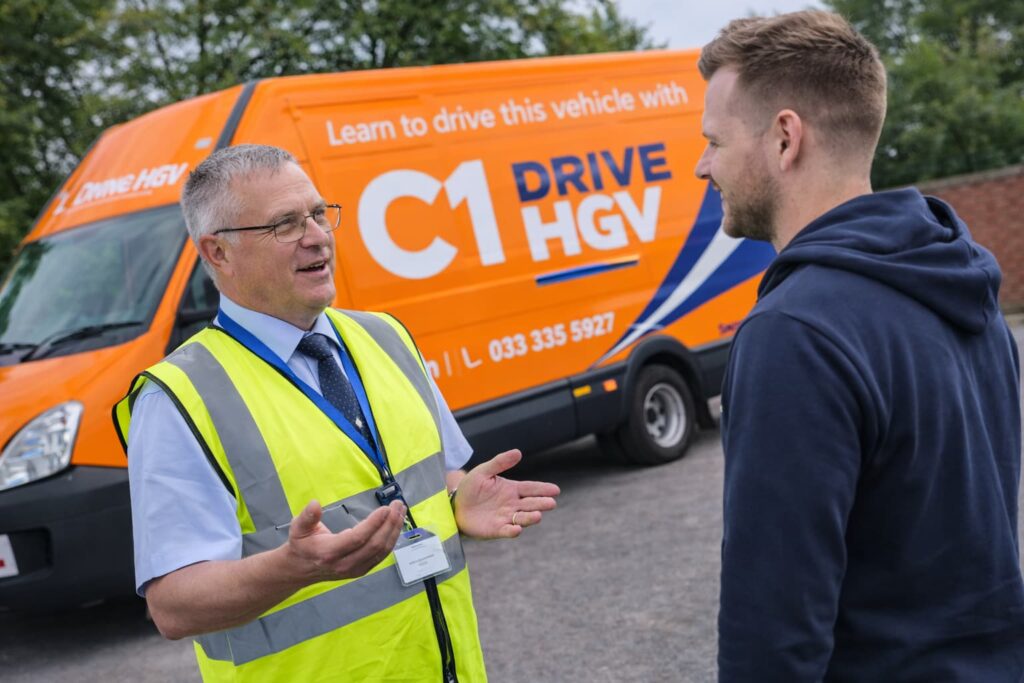
Your C1 driving lessons develop the observation, judgement and vehicle control needed to drive a rigid HGV safely and confidently.
Your instructor helps you practise the areas that need attention and prepare for the test standard.
For Category C1, the off-road test assesses an S-shaped reverse into a bay. Your instructor helps you practise observation, control and accurate positioning.
After passing part 3a, you take the on-road test. This includes vehicle safety questions and an hour of road driving, assessing control, observation and safe decisions.
From a new driving role to travelling in a larger motorhome, C1 training helps you use the vehicle that fits your plans.
Choose your licence around the vehicle’s plated weight and the work or activities you want to do. Our team can talk through the requirements before you book.
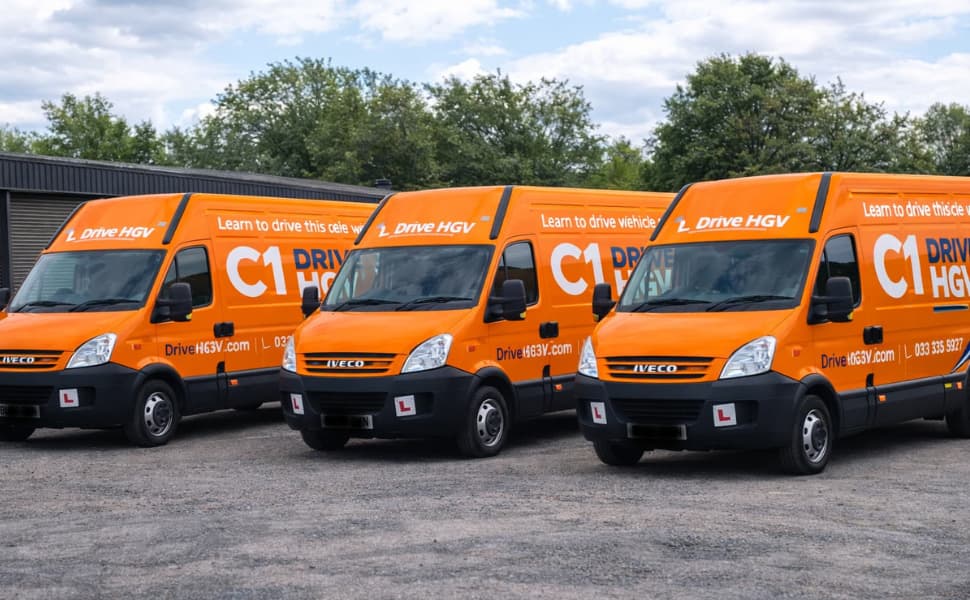
C1 entitlement is commonly requested for ambulance roles using vehicles in this weight range. This course covers your driving licence; clinical qualifications, emergency-response training and employer assessments are separate.
Train for 7.5-tonne delivery and removals vehicles. These roles can combine driving, customer service and safe loading, with Driver CPC normally required for professional goods driving.
Drive a motorhome or horsebox over 3.5 tonnes and up to 7.5 tonnes MAM with the appropriate C1 entitlement. Check the vehicle’s weight and any trailer requirements before choosing your course.
Our in-house recruitment team helps you present your qualification and explore suitable driving opportunities. Employers set their own experience and recruitment requirements.
Explore our recruitment support ↗Explore Category C1 training in towns, cities and regions across Great Britain, with local instructors and a dedicated adviser organising your training journey.
Find C1 training by postcode or town ↗Lesson meeting points vary by area. Our team will explain your local arrangements when planning your course.
Read reviews from Drive HGV learners across the UK.
Request a personalised quote for your C1 licence course. Your adviser will explain the medical, theory support, practical lessons and tests included, plus Driver CPC where needed.
Yes. C1 is commonly called the 7.5-tonne licence. It covers vehicles over 3.5 tonnes and up to 7.5 tonnes maximum authorised mass, with a trailer up to 750kg.
Many ambulance roles require C1 entitlement because of the vehicle weight. Check the role’s licence requirements with the employer. C1 training does not replace clinical qualifications or emergency-response driver training.
C1 covers motorhomes over 3.5 tonnes and up to 7.5 tonnes MAM. For heavier motorhomes, a different entitlement is needed. Check your vehicle’s plated weight and your current licence categories.
C1 can cover a horsebox over 3.5 tonnes and up to 7.5 tonnes MAM. The vehicle must remain within its permitted laden weight. Towing a trailer may require a different entitlement.
You may already have C1 entitlement if you passed your car test before 1 January 1997. Check your current licence, restriction codes and expiry dates before booking.
Your adviser will confirm your practical course schedule. For new licence applicants, the whole process typically takes around 6–8 weeks, depending on medical appointments, DVLA processing, theory progress and test availability.
Non-commercial personal use can be exempt from Driver CPC. Professional goods driving usually requires CPC, while other specific exemptions may apply. Tell your adviser how you plan to use the vehicle so the correct requirements can be checked.
No previous large-vehicle experience is needed. You will need a full car licence and the appropriate provisional entitlement before practical training. Your instructor helps you build safe vehicle control and observation skills.
Tell us where you want to train and which licence you currently hold. We’ll explain your Category C1 course options, pricing and available dates.
A dedicated adviser from your first call through to passing.